The Clinic Method
— Conditions —
IBS & Gut Health Chronic Fatigue & ME/CFS Autoimmunity Thyroid Disorders Skin Conditions Women’s Health ADHD & Neuropsychiatry Cognitive Health
— Diagnostics —
ALCAT — Food Intolerance CMA — Cellular Nutrients MethylDetox — 38 Genes Biological Age Panel Alzheimer’s Assessment
— Genova Diagnostics —
All Tests GI Effects® NutrEval® Metabolomics SIBO Breath Test Hormonal Panels Treatment Families Research Clinical Notes FAQ SV — Swedish version Book Consultation
Precision Medicine · Hormonal Balance · Stockholm · International Patients Welcome
Functional Gynaecology · Multi-Omics Diagnostics

Your hormonal health
deserves more than a
standard blood test.

Conventional hormone tests measure a single moment. We measure metabolic pathways, the gut microbiome's influence on oestrogen cycling, genetic methylation capacity and immune triggers — to understand why your hormones are out of balance, not just that they are.

PMS / PMDD Perimenopause Menopause PCOS Endometriosis Chronic Fatigue
4.87
Top-rated clinic in Sweden
Verified patient reviews · Reco.se
25,000+Patients investigated
6Diagnostic layers
GCRClinical framework
OfficialGenova Distributor SE
International Patients

We accept patients from anywhere in the world.

Initial consultation and results review via secure video call. Test kits shipped to your address — blood draw at a local laboratory near you. All consultations conducted in English.

Video consultation in English
Test kits shipped internationally
Home collection — urine & saliva
Book a Consultation
Global Constraint Rule

Why hormonal treatment
often doesn't work

Hormonal imbalance is often treated as an isolated endocrine problem — low oestrogen, give oestrogen. Progesterone deficiency, give progesterone. But hormones are not isolated systems. They are integrators of biological information from the immune system, gut microbiome, cellular energy production and the methylation capacity of the epigenome.

Global Constraint Rule (GCR) is MediBalans' clinical framework developed by Dr Mario Anthis. The GCR principle is that every patient's biology is governed by a dominant biological constraint — a primary bottleneck that determines how all other systems function. Treating hormones without identifying whether the gut, immune system or methylation capacity is the actual primary constraint is why hormonal interventions produce partial or short-lived responses.

At MediBalans we map all relevant domains with precision — then sequence the interventions in the order biology requires.

GCR · Hormonal Constraint Domains

Four reasons hormones are out of balance that standard tests don't find

01 Gut bacteria are recirculating oestrogen. The enzyme beta-glucuronidase produced by colonic bacteria reactivates conjugated oestrogens in the gut. Measurable via GI Effects®. This is called the oestrobolome.
02 COMT variants block oestrogen methylation. COMT Val158Met — a common genetic variant — reduces enzyme activity by 40%, allowing genotoxic metabolites to accumulate. Identified via MethylDetox.
03 Immune reactivity drives inflammation that mimics hormonal symptoms. Histamine-producing mast cells activated by ALCAT-identified food immune reactivities cause PMS-like symptoms entirely independent of hormonal levels.
04 Intracellular magnesium deficiency causes PMS and menstrual migraine. Magnesium is cofactor for 300+ enzymes including prostaglandin synthesis. CMA 55-marker analysis measures directly inside the cell — not in serum.
Clinical Conditions

We investigate and treat

Perimenopause & Menopause

The perimenopausal transition begins on average 4–10 years before the last period and is characterised by dramatic fluctuations in oestradiol and progesterone — not simply declining levels. Clinical consequences are individual and depend on hormone metabolic pathways, genetic methylation capacity and chronic immunological load.

Why standard tests are insufficient: FSH and E2 in serum confirm that menopause is occurring. They do not explain why one patient has severe symptoms and another has none at the same hormone levels. Oestrogen metabolite mapping, COMT genotyping and the cortisol curve provide that answer.

GCR Constraint in Perimenopause

Cortisol elevation secondary to sleep disruption and psychosocial stress is the most common amplifier of perimenopausal symptoms. Cortisol competes with progesterone for shared receptors — the Adrenocortex Stress Profile cortisol curve is mandatory.

Genova Diagnostics

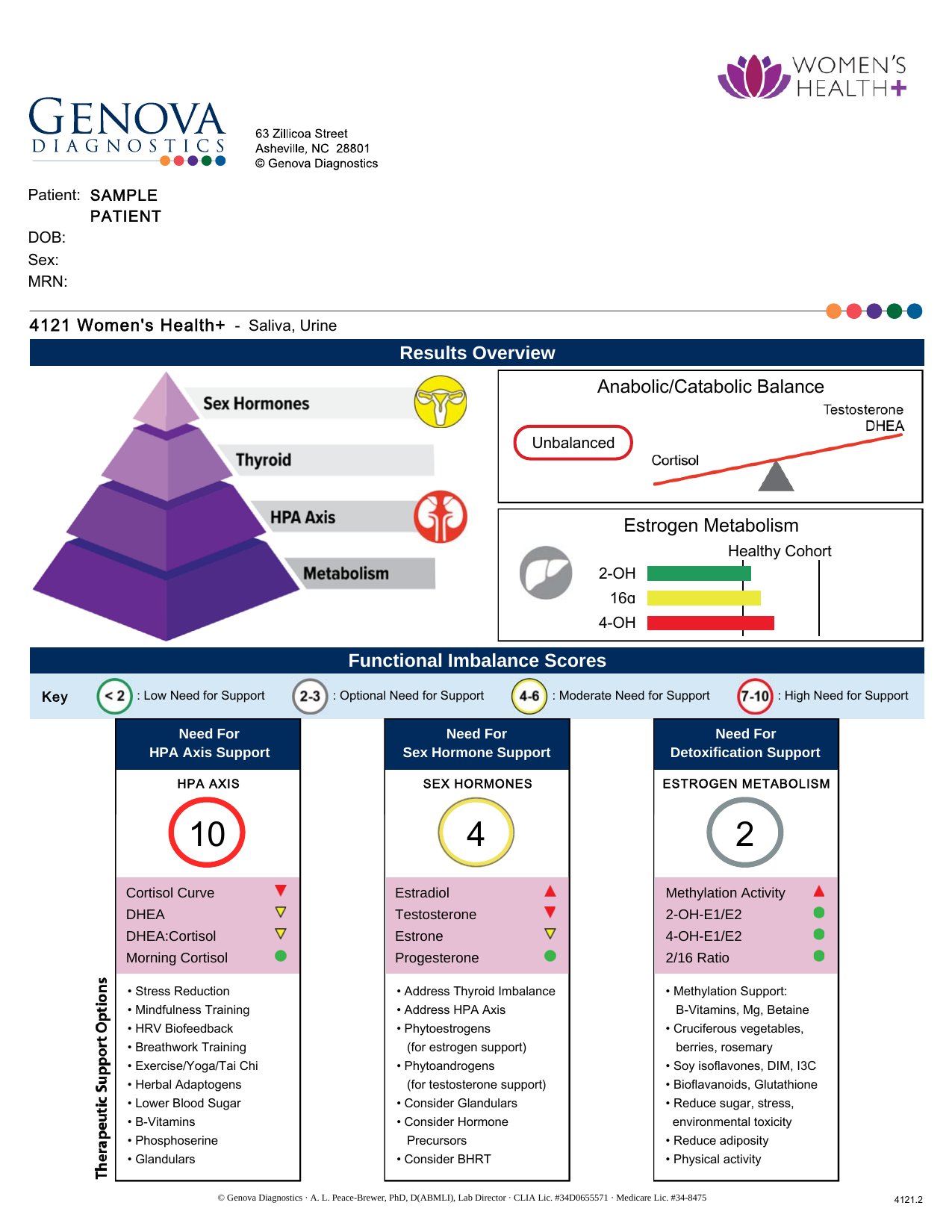
Women's Health+ / Menopause Plus™

Integrated endocrine and metabolomic panel — oestrogen and metabolites, progesterone, testosterone, DHEA, cortisol, melatonin and organic acids in a single specimen. Specifically designed for peri- and post-menopausal mapping.

Genova Diagnostics

Adrenocortex Stress Profile (ASP)

Four timed saliva samples mapping cortisol and DHEA across the day. Essential for assessing whether HPA axis dysregulation is amplifying menopausal symptoms and whether the cortisol:DHEA ratio indicates catabolic dominance.

MediBalans

MethylDetox — COMT + CYP1B1

COMT Val158Met and CYP1B1 determine the oestrogen metabolite profile and risk pattern. Mandatory before hormone therapy to ensure that 4-OH oestrogen metabolites do not accumulate.

MediBalans

CMA — 55 Intracellular Markers

Magnesium, B6 and zinc are critical cofactors for oestrogen and progesterone synthesis. Intracellular deficiency — invisible in serum — is measured directly in lymphocytes.

PCOS — four phenotypes,
one diagnosis

Polycystic ovary syndrome covers at least four distinct phenotypes with different biochemical mechanisms. Classic PCOS (hyperandrogenism + anovulation + polycystic ovaries) has a different primary constraint than ovulatory PCOS without hyperandrogenism.

Insulin resistance is the dominant driver in ~70% of PCOS patients. Hyperinsulinaemia stimulates ovarian androgen production and creates the characteristic androgenic pattern. But insulin resistance is itself driven by chronic immune activation — measurable with ALCAT, not standard glucose panels.

GCR Sequencing in PCOS

ALCAT testing is the first-line intervention in treatment-resistant PCOS. Chronic immune reactivity to foods drives systemic inflammation that worsens insulin resistance and androgen production. Protocol: ALCAT → HOMA-IR/metabolomics → androgen profile → methylation capacity.

Cell Science Systems

ALCAT 250+ — Immune Reactivity

Chronic low-grade immune activation is a primary driver of insulin resistance in PCOS. ALCAT identifies the specific foods and chemicals triggering the inflammation — delivering a precise elimination strategy.

Genova Diagnostics

Adrenocortex Stress Profile (ASP)

The cortisol:DHEA ratio and DHEA level differentiate ovarian from adrenal androgen production — essential for the correct treatment protocol.

Genova Diagnostics

NutrEval® Metabolomics

Insulin resistance-associated metabolomic patterns plus inositol, chromium and magnesium status — all clinically relevant in PCOS.

MediBalans

MethylDetox — 38 Genes

MTHFR and COMT affect androgen metabolism and oestrogen balance in PCOS. Genetic mapping defines the supplementation strategy and illuminates epigenetic constraints.

Endometriosis & Fibroids

Endometriosis is an oestrogen-driven inflammatory disease. The central clinical question is: why does this patient have a biochemical environment that supports endometrial growth and inflammation?

Oestrogen excess in endometriosis rarely depends on overproduction alone. It depends on the combination of impaired oestrogen methylation (COMT variants), elevated beta-glucuronidase in the gut recirculating conjugated oestrogens, and insulin resistance increasing aromatase activity.

GCR Constraint in Endometriosis

The gut constraint (beta-glucuronidase) and genetic constraint (COMT) are the most consistently identifiable biological drivers. GI Effects® is mandatory before any oestrogen-reduction protocol.

Genova Diagnostics

GI Effects® + Beta-Glucuronidase

Beta-glucuronidase activity in GI Effects® is the single most important marker in oestrogen-driven disease. Elevated activity indicates gut bacteria are actively recirculating oestrogen — a correctable biological fact.

MediBalans

MethylDetox — COMT + CYP1B1

COMT Val158Met reduces methylation of 2-OH oestrogen to the protective 2-methoxy form. CYP1B1 directs hydroxylation toward 4-OH oestrogen (genotoxic). The combination defines the patient's structural oestrogen risk pattern.

Cell Science Systems

ALCAT 250+ — Immune Reactivity

Identifies the specific food antigens driving the systemic immune activation that amplifies endometriosis' inflammatory profile and pain symptoms.

MediBalans

CMA — 55 Intracellular Markers

Omega-3 index (AA:EPA ratio), magnesium and antioxidant status are directly linked to the prostaglandin and leukotriene profiles governing endometriosis-related pain intensity.

PMS & PMDD

PMS and PMDD represent a spectrum of luteal phase symptoms — but they do not share a single biochemical cause. In one patient, PMS is driven primarily by progesterone insufficiency relative to oestrogen. In another, by allopregnanolone sensitivity. In a third, by intracellular magnesium deficiency. In a fourth, by histamine intolerance driven by food immune reactivity.

Conventional treatment — SSRIs and the pill — is symptom-based and does not allow differentiation of these mechanisms. A patient with PMS secondary to magnesium deficiency does not need an SSRI — she needs measurable, intracellular magnesium correction.

GCR Differentiation in PMS

CMA 55-marker analysis is the first-line instrument. Intracellular magnesium, B6 (PLP) and omega-3 index differentiate the nutritional primary constraint from the hormonal. Treatment resistance without this data leads to empirical supplementation that rarely hits the correct target.

MediBalans

CMA — 55 Intracellular Markers

Intracellular magnesium, B6 (PLP), omega-3 index and calcium:magnesium ratio are the most clinically relevant markers for PMS and menstrual migraine. CMA measures directly inside the cell — not in serum.

Genova Diagnostics

Rhythm Plus™ — 28-Day Cycle Mapping

Salivary oestradiol and progesterone measured daily across the entire menstrual cycle. Provides a complete picture of luteal phase progesterone — not a single snapshot value.

Cell Science Systems

ALCAT — Histamine-Triggering Reactivities

Mast cell activation via IgE-independent immune mechanisms against fermented foods and alcohol worsens PMS through histamine production. ALCAT identifies the specific triggers.

MediBalans

MethylDetox — COMT + MAO-A

MAO-A variants affect serotonin catabolism and contribute to PMDD's neuropsychiatric symptoms. COMT affects oestrogen-neurotransmitter interactions. Genetic mapping provides a permanent biological explanation.

Chronic fatigue
in women

Chronic fatigue in women is frequently diagnosed as depression, anxiety or 'stress' without investigating the underlying biology. MediBalans data shows that treatment-resistant fatigue in women almost always has an identifiable multi-domain biological explanation: a combination of immunological, metabolomic, gut and endocrine constraints acting synergistically.

The most consistent pattern: ALCAT reactivities driving chronic immune activation → mitochondrial energy dysfunction visible in NutrEval/Organix → HPA axis dysregulation with flat cortisol pattern → intracellular magnesium and functional B12 deficiency in CMA.

GCR Protocol in Chronic Fatigue

The immunological constraint (ALCAT) is almost always primary in chronic fatigue. Eliminating ALCAT-identified reactivities reduces the chronic cytokine elevation that suppresses mitochondrial function and the HPA axis. Without ALCAT data, you are treating consequences — not causes.

Cell Science Systems

ALCAT 250+ — Immune Reactivity

Primary instrument. Chronic immune activation against foods and chemicals is the most common and least diagnosed cause of treatment-resistant fatigue. Results deliver a precise individual dietary correction strategy.

MediBalans

CMA — 55 Intracellular Markers

Intracellular CoQ10, carnitine, magnesium, B12 and B6 assess mitochondrial capacity directly inside the cell. The combination of these deficiencies explains the energy disorder without attributing it to 'burnout'.

Genova Diagnostics

Adrenocortex Stress Profile (ASP)

A flat, low-amplitude cortisol pattern (HPA axis exhaustion) is a common finding in chronic fatigue. The cortisol:DHEA ratio guides adaptogen protocols and recovery strategy.

Genova Diagnostics

GI Effects® + SIBO

Gut dysbiosis and SIBO drive malabsorption of B12, iron and fat-soluble vitamins — direct contributors to fatigue. Mandatory investigation in treatment-resistant fatigue with GI symptoms.

Oestrogen Metabolism

What happens to oestrogen after the ovary

Oestrogen is not a simple hormone with a single effect. It is a family of molecules metabolised via competing enzymatic pathways — and which pathway dominates determines whether oestrogen is protective or risk-driving for your patient.

Standard hormone tests measure total oestradiol. They do not measure which metabolic pathways dominate. Genova Women's Health+ and MethylDetox provide the complete picture — and define which clinical strategy is rational.

The oestrobolome factor: Gut bacteria's beta-glucuronidase activity determines how much conjugated (inactivated) oestrogen is reactivated in the gut and recirculates systemically. This is not visible in any hormone test — it is measured in GI Effects®.

E2
Oestradiol (E2) — CYP1A1/1B1
Hydroxylated in the liver via CYP450 enzymes into three competing metabolic pathways. CYP1A1 → 2-hydroxylation (protective). CYP1B1 → 4-hydroxylation (risk pathway).
2OH
2-OH-Oestrone — protective metabolite
Methylated via COMT to 2-methoxy-oestrone (inactive, protective). COMT Val158Met variant reduces this step by 40%.
4OH
4-OH-Oestrone — genotoxic metabolite
Forms quinone radicals that directly damage DNA. Elevated with CYP1B1 overactivity and/or COMT insufficiency. Clinically relevant in endometriosis and oestrogen-related cancer risk.
16OH
16-OH-Oestrone — proliferative metabolite
Strongly oestrogenic — stimulates cell proliferation. Elevated in obesity, insulin resistance and toxin exposure. Associated with endometriosis and uterine fibroids.
β-G
Beta-Glucuronidase — the oestrobolome
Gut bacteria's enzyme cleaves conjugated oestrogen and reactivates it. Measurable in GI Effects®. Direct effect on systemic oestrogen level independent of ovarian production.
The GCR Protocol

How we work with your hormonal health

01
Clinical Consultation
45-minute review of symptom picture, history and clinical prioritisation. The GCR framework determines which diagnostic domains are investigated in which order for your specific presentation. Available in Stockholm or via video call.
Clinical assessmentGCR prioritisation
02
Immunological Baseline
ALCAT 250+ identifies immune reactivities driving systemic inflammation. CMA 55 maps intracellular nutritional status — the cofactors that all hormonal enzymatic reactions depend on.
ALCAT 250+CMA 55 markers
03
Endocrine & Gut Mapping
Genova Women's Health+ or condition-guided panel (Rhythm Plus™, ASP, Menopause Plus™) provides the hormonal profile. GI Effects® measures beta-glucuronidase and the gut's influence on oestrogen cycling.
Women's Health+GI Effects®ASP
04
Genetic Constraint Profile
MethylDetox 38 genes — including COMT, CYP1B1, MTHFR and MAO — defines the patient's permanent biological ceiling for oestrogen metabolism, methylation capacity and neurotransmitter handling. Informs long-term strategy.
MethylDetox 38 genesCOMT · CYP1B1 · MTHFR
Why MediBalans

What sets us apart

01

We measure oestrogen metabolites — not just oestrogen

Genova Women's Health+ provides the 2-OH, 4-OH and 16-OH oestrone profile. This is the clinical information that determines risk and treatment strategy — and which no conventional hormone analysis in Sweden provides.

02

The gut is always part of the protocol

Beta-glucuronidase in GI Effects® is included in every oestrogen investigation. The gut microbiome's influence on hormonal cycling is documented and measurable — and the correction is concrete and achievable.

03

Genetics defines the treatment ceiling

COMT genotype determines whether DIM and calcium-D-glucarate are relevant. CYP1B1 variants determine whether 4-OH oestrogen risk is structural. Without this data, supplementation recommendations are guesswork.

"I had had PMS and fatigue for eight years. Three gynaecologists, two psychologists and an antidepressant that didn't help. MediBalans found elevated beta-glucuronidase, intracellular magnesium deficiency and a COMT variant. Six months later I am a different person."
Anna K. PMS · Hormones Verified on Reco.se →
FAQ

Questions about hormonal investigation

Conventional hormone tests measure total serum levels at a single timepoint. They do not measure hormone metabolic pathways, how efficiently the body breaks down oestrogen, the cortisol circadian curve, the adequacy of luteal phase progesterone, or the genetic capacity to methylate oestrogen metabolites. MediBalans measures all of these dimensions — which is why we find clinically actionable abnormalities in patients whose standard panels look normal.
Gut bacteria produce the enzyme beta-glucuronidase, which cleaves conjugated oestrogens in the colon and recirculates them in active form. High beta-glucuronidase activity — measurable via GI Effects® — is a direct cause of oestrogen excess independent of ovarian production. This is called the oestrobolome. All patients with oestrogen-related complaints (endometriosis, fibroids, PMS, oestrogen dominance) are investigated with GI Effects® as a mandatory part of the hormonal protocol at MediBalans.
COMT (catechol-O-methyltransferase) is the enzyme that methylates oestrogen's 2-OH metabolite into the protective 2-methoxy form. The COMT Val158Met variant reduces enzyme activity by 40%, causing genotoxic oestrogen metabolites to accumulate. The MethylDetox 38-gene panel includes COMT analysis and identifies patients with structurally impaired oestrogen metabolism — informing treatment protocols with DIM, calcium-D-glucarate and methylated B-vitamins.
Standard gynaecological investigation is symptom-based and focuses on structural findings — ultrasound, hormonal reference values, standard biochemistry. MediBalans complements this with functional biochemistry: what does the body do with the hormones, why, and which biological constraints govern the response. We investigate oestrogen metabolism, gut influence on hormonal cycling, immune reactivity, intracellular nutritional status and methylation capacity. The results are complementary — we do not replace gynaecology, we give it the clinical context it is missing.
Yes. PCOS is one of our most common investigation areas. PCOS is a heterogeneous condition with at least four distinct phenotypes requiring individual diagnostics. We measure androgen profile, insulin resistance markers, HPA axis status (cortisol:DHEA), oestrogen metabolism and inflammation markers. The ALCAT test identifies immune reactivities to foods driving the systemic inflammation that worsens PCOS. The treatment protocol is adapted to what the measurement data shows for your specific biochemistry.
Bioidentical hormone therapy can be part of the treatment protocol for the right patient at the right time — but never without prior mapping of oestrogen metabolism and methylation capacity. Starting BHRT in a patient with a COMT variant and elevated CYP1B1 activity without correcting these biological bottlenecks can worsen the situation rather than improve it. Our diagnostics define the prerequisites for hormone therapy — not the other way around.
Yes. Women's Health+ uses urine and saliva collection — home specimens that can be shipped internationally. The Adrenocortex Stress Profile and Rhythm Plus are also saliva-based. The initial consultation and results review are conducted via secure video call in English. Blood-based panels require a local draw at a laboratory near you — we guide you on how to arrange this.
Next Step

Your hormonal health
deserves an answer.

Book a 45-minute clinical consultation. We review your situation, prioritise the right diagnostics and put together a protocol based on what measurement data shows — not on symptom guesswork. Available in Stockholm or via video call internationally.

meet mario