The Clinic Our Method
— Conditions —
IBS & Gut Health Chronic Fatigue & ME/CFS Autoimmunity Skin Conditions ADHD & Neuropsychiatry Thyroid & Hormones Cognitive Health
— Diagnostics —
ALCAT — Food Intolerance CMA — Cellular Micronutrients MethylDetox — 38 Genes Biological Age Alzheimer's Investigation HRV Analysis
— Genova Diagnostics —
All tests GI Effects® NutrEval® Metabolomics SIBO Test Hormonal Panels Organix® Fatty Acids Adrenal Stress Essential Estrogens Menopause Plus Women's Health+ IV Therapy Families Research Clinical Notes FAQ SV — Swedish version Book Consultation
Genova Diagnostics · Official Swedish Distributor
Cardiometabolic Diagnostics · Blood-Based

Fatty Acid Analysis
Inflammation at the cellular level.

Measures omega-3, omega-6, saturated and unsaturated fatty acids in blood. Identifies inflammation-driving imbalances rarely visible in standard tests.

Order Fatty Acid Analysis — 3 900 kr

The test kit is shipped to your home. Includes 2 months access to meet mario.

Inflammation Cardiovascular Risk Fatigue Brain Fog Autoimmunity ADHD
BloodSpecimen type
5Clinical Domains
HomeCollection — kit shipped
14–21Days turnaround
Global Constraint Rule

Why fatty acid status must be measured

The fatty acid profile is one of the most underestimated markers in functional medicine. An imbalance between omega-6 and omega-3 drives systemic low-grade inflammation that sustains chronic pain, cardiovascular risk and autoimmune conditions — without appearing in standard blood work.

Fatty acids in red blood cells reflect the past 90 days of dietary intake and cell membrane status. An omega-3 index below 8% is an independent risk factor for cardiovascular disease. The AA/EPA ratio measures the inflammation balance at the cellular level.

GCR — The role of fatty acids in the constraint hierarchy

Elevated arachidonic acid (AA) and low EPA indicate a pro-inflammatory cellular environment that undermines all downstream protocols. The fatty acid profile determines whether omega-3 supplementation is indicated — and at what dose — before other interventions are initiated.

GCR Protocol · Three diagnostic layers

The fatty acid analysis is always interpreted in context with CMA and NutrEval

1
CMA intracellular nutrient analysis confirms whether the cofactors required for fatty acid conversion — vitamin B6, magnesium, zinc — are present inside the cells. Delta-6-desaturase enzyme activity is B6- and magnesium-dependent.
2
The fatty acid analysis maps the omega-3/6/9 status, the saturated fatty acid profile and the AA/EPA ratio that measures the inflammation balance at the cellular level.
3
NutrEval combines the fatty acid profile with organic acids and amino acids in a comprehensive metabolic picture — recommended for complex cardiometabolic presentations.
What It Measures

Five clinical measurement domains

Domain 01 · Omega-3

Omega-3 Fatty Acids

EPA, DHA and DPA are measured in red blood cells. The omega-3 index — the proportion of EPA+DHA of total fatty acids in the erythrocyte membrane — is an independent cardiovascular risk marker. Values below 4% are associated with significantly increased risk.

Domain 02 · Omega-6

Omega-6 & Inflammation

Arachidonic acid (AA) and linoleic acid are measured. The AA/EPA ratio is the most clinically useful inflammation index — reflecting the balance between pro- and anti-inflammatory eicosanoid pathways at the cellular level.

Domain 03 · Saturated Fatty Acids

Saturated Fatty Acids

Palmitic and stearic acids are measured. Elevated saturated fatty acids in the cell membrane affect membrane fluidity and insulin signalling. The source — dietary vs endogenous synthesis — provides clinical guidance.

Domain 04 · Trans Fats

Trans-Fatty Acids

Elaidic acid and other industrial trans fats are measured. Trans fats are incorporated into the cell membrane and disrupt normal fatty acid conversion. Clinical relevance for cardiovascular risk and inflammatory conditions.

Domain 05 · Cardiovascular Risk

Cardiovascular Risk Profile

Omega-3 index, AA/EPA ratio and total fatty acid profile are integrated into a cardiovascular risk assessment. Provides objective data for omega-3 dosing and dietary intervention.

Sample Report

What your results look like

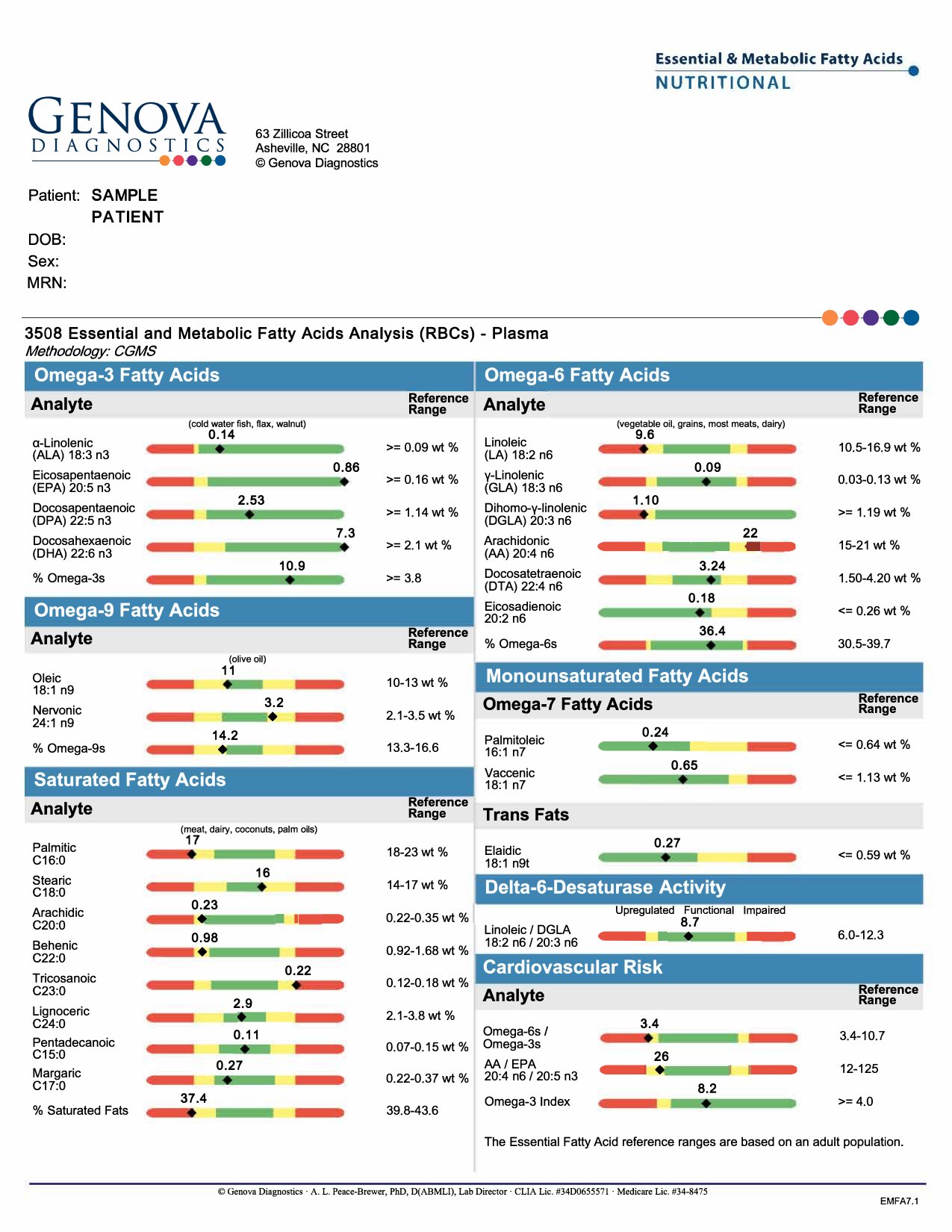
The fatty acids report provides a visual overview of your fatty acid status across five clinical domains — with omega-3 index, AA/EPA ratio and individual fatty acid values compared against clinical reference ranges.

Fatty acid analysis sample report — omega-3 index and inflammation profile

Five clinical domains

  • 01 Omega-3 — EPA, DHA, DPA and cardiovascular protection
  • 02 Omega-6 — arachidonic acid and inflammation status
  • 03 Saturated Fatty Acids — palmitic acid, stearic acid and metabolic risk
  • 04 Trans Fats — elaidic acid and cell membrane impact
  • 05 Cardiovascular Risk — omega-3 index and AA/EPA ratio
View full sample report (PDF) →
GCR Protocol

How we work with fatty acid findings

Fatty acid results generate a cardiometabolic protocol that addresses the inflammation balance and cardiovascular risk with objective measurement data.

01
Clinical Consultation & GCR Prioritisation
A 45-minute review of symptom history, dietary history and cardiovascular risk profile. The GCR framework determines whether the fatty acid analysis is the primary investigation or whether parallel analyses are indicated.
GCR AssessmentAnamnesis
02
Sample Collection & Laboratory Analysis
The kit is shipped to your home. A blood sample is collected by fingerstick or venous draw according to the instructions. The sample is sent directly to Genova's laboratory. Turnaround 14–21 days.
Home Test14–21 DaysCLIA-Certified
03
Multi-layer Analysis & Interpretation
The fatty acid profile is interpreted by Dr Mario Anthis in context with CMA and NutrEval data. The omega-3 index is cross-referenced against intracellular EPA status (CMA). The AA/EPA ratio is linked to inflammation markers in the other analyses.
Multi-layer AnalysisGCR HierarchyPrioritisation
04
Targeted Fatty Acid Intervention
Based on the fatty acid profile, a cardiometabolic protocol is designed: dosed omega-3 supplementation based on omega-3 index and body weight, dietary modification based on AA/EPA ratio, elimination of trans fats when elaidic acid is elevated. Follow-up after 3–6 months with a new analysis.
Targeted Treatment3–6 MonthsFollow-up
Why MediBalans

What sets us apart

01

Fatty acid analysis is never interpreted in isolation

At MediBalans, the fatty acid profile is cross-referenced with CMA intracellular nutrient status and NutrEval data. It is the combination that reveals why the inflammation balance is disrupted — and exactly which intervention is indicated.

02

Official Genova Distributor

MediBalans is Genova's official Swedish distributor with a direct laboratory relationship and full access to all Genova panels.

03

We sell no supplements

MediBalans sells no supplements. Omega-3 dosing is based exclusively on measurement data — omega-3 index and body weight — not on general recommendations.

"I had elevated triglycerides and CRP for three years despite an anti-inflammatory diet. The fatty acid analysis showed an omega-3 index of 3.2% and an AA/EPA ratio of 28 — far outside clinical targets. With dosed omega-3 based on exact measurement data, both markers normalised within six months."
Erik S. Cardiovascular Risk · Inflammation · 3 years · Verified on Reco.se
Questions

About the Fatty Acid Analysis

The test measures the fatty acid composition in red blood cells — reflecting the past 90 days of cell membrane status. It covers omega-3 fatty acids (EPA, DHA, DPA, ALA), omega-6 fatty acids (arachidonic acid, linoleic acid, GLA), saturated fatty acids (palmitic, stearic), monounsaturated fatty acids (oleic acid), trans fatty acids (elaidic acid), and calculated risk markers including the omega-3 index and AA/EPA ratio.

The omega-3 index is the proportion of EPA+DHA of total fatty acids in the erythrocyte membrane. It is an independent cardiovascular risk marker with strong epidemiological evidence. Values below 4% are associated with significantly increased risk of sudden cardiac death. The optimal range is 8–12%. The test provides the objective data needed to dose omega-3 supplementation correctly based on actual biological effect.

The AA/EPA ratio measures the balance between arachidonic acid (pro-inflammatory omega-6) and eicosapentaenoic acid EPA (anti-inflammatory omega-3) in the cell membrane. The ratio reflects the inflammatory tone at the cellular level — more reliable than CRP for chronic low-grade inflammation. Japanese population studies show that a ratio below 2.5 is associated with the lowest cardiovascular risk.

The fatty acid analysis can be collected as a fingerstick blood sample at home or as a venous blood sample. The kit is shipped to your address with detailed instructions. The fingerstick sample is collected in the morning in a fasted state and sent directly to Genova's laboratory with the prepaid return envelope.

Related tests

Often combined with the Fatty Acid Analysis

How does the fatty acid analysis compare to Zinzino and others?

A fact-based comparison.

MediBalans / Fatty Acids GetTested / Omega-3 test Zinzino BalanceTest Standard blood test
Fatty acids measured30+11112–5 (omega-3 index)
MethodGC/MS, venous bloodDried blood spot (DBS)Dried blood spot (DBS)Venous blood, serum
LaboratoryGenova, CLIA-cert., USAUnknownVitas, OsloRegional lab
Omega-3 IndexRarely
AA/EPA ratio (cardiovascular risk)
Trans fats (elaidic acid)
Saturated fatty acids (full profile)
Physician interpretation Always included
PurposeClinical diagnosticsHealth screeningSell BalanceOilScreening
PriceSEK 3,900~SEK 500~SEK 400 (+ subscription)SEK 0–300

Zinzino's BalanceTest is designed to motivate purchases of their supplement. It measures 11 fatty acids. Genova measures 30+ — including cardiovascular risk markers and trans fats absent from consumer tests.

Next Step

Measure your inflammation balance
at the cellular level.

The fatty acid analysis is interpreted by Dr Mario Anthis in context with your CMA and NutrEval findings. Book a consultation to determine which combination of tests is indicated for your specific presentation.

Order Fatty Acid Analysis — 3 900 kr Book Consultation

The test kit is shipped to your home. Includes 2 months access to meet mario.

meet mario